
Safaga is Egypt's most efficient Red Sea dive base, combining beginner-friendly coral sites like Tobia Arbaa with advanced walls such as Abu Kafan and one of the region's most discussed wrecks, Salem Express — all within a single day-boat zone. Site variety is high, reefs are less crowded than Hurghada, and the five headline sites cover every certification level from Open Water to Advanced (Egyptian Tourism Authority, 2026; PADI, 2026).
Quick Summary
- Safaga sits south of Hurghada on Egypt's Red Sea coast and is the main marina base for Safaga reef and wreck diving.
- Best-known sites: Tobia Arbaa, Salem Express, Panorama Reef, Abu Kafan, Middle Reef.
- Best for beginners: Tobia Arbaa, Middle Reef, selected Panorama moorings.
- Best for experienced divers: Abu Kafan, Panorama drifts, Salem Express.
- Best months for comfort and visibility: April–May and October–November (PADI Travel, 2026).
- Typical 2-dive day trip price: €74, with gear and extras charged separately by many operators.
- Salem Express is a memorial site. Many responsible operators brief it as exterior-only and some do not offer penetration at all.
- Tobia Arbaa is popular because it gives coral scenery, easy navigation, photo-friendly light, and a shallow depth profile in a single site.
- Compared with Hurghada, Safaga is quieter and more dive-focused. Compared with Marsa Alam, it is easier for mixed-skill groups and stronger on wreck access.

Where Safaga Is and Why the Location Works
Safaga is on Egypt's Red Sea coast, south of Hurghada and just south of Soma Bay. For divers, that location matters because it gives reasonable road access from major resort zones while putting classic offshore reefs and the Salem Express wreck within normal day-boat range.
Safaga's position relative to nearby Red Sea bases
| Base | Road distance to Safaga marina | Typical transfer time | Practical use for divers |
|---|---|---|---|
| Hurghada Marina area | 53 km | 60 min | Good day-trip option, but earlier hotel pickup required |
| Hurghada Airport area | 48 km | 50 min | Common for arrival-day transfers to Safaga hotels |
| Makadi Bay | 32 km | 40 min | Easy day-trip transfer for certified divers |
| Soma Bay | 8 km | 12 min | Closest resort base to Safaga dive departures |
| El Quseir | 79 km | 80 min | Possible, but not the most efficient base |
| Port Ghalib / Marsa Alam Airport zone | 171 km | 165 min | Usually too far for casual day diving in Safaga |
Safaga is the logical diving base if you are staying in Safaga itself or Soma Bay. From Makadi Bay it is still realistic for a day trip; from central Hurghada it works, but the pickup day starts early.
Best Time to Dive Safaga
Safaga is a year-round destination, but conditions are most balanced in spring and autumn. PADI Travel highlights March–May and September–November as the best overall Red Sea windows, with water temperatures ranging from 21°C to 30°C and visibility between 20 m and 40 m depending on month and wind (PADI Travel, 2026).
Monthly conditions divers can actually use
| Month | Avg air temp °C | Avg sea temp °C | Typical visibility m | Likely wetsuit |
|---|---|---|---|---|
| January | 22 | 22 | 20–28 | 5 mm full suit |
| February | 23 | 21 | 20–30 | 5 mm full suit |
| March | 25 | 22 | 22–32 | 5 mm or 3 mm full suit |
| April | 29 | 23 | 25–35 | 3 mm full suit |
| May | 32 | 25 | 25–35 | 3 mm full suit / shorty |
| June | 35 | 27 | 20–30 | 3 mm shorty |
| July | 37 | 28 | 18–28 | 3 mm shorty / rash vest |
| August | 38 | 29 | 18–28 | 3 mm shorty / rash vest |
| September | 34 | 28 | 22–32 | 3 mm shorty |
| October | 31 | 27 | 25–35 | 3 mm full suit / shorty |
| November | 27 | 25 | 24–34 | 3 mm full suit |
| December | 23 | 23 | 20–30 | 5 mm full suit |
The top-value months are April, May, October, and November. Water is warm enough for long second dives, air temperatures are manageable on deck, and visibility is consistently better than peak summer haze periods.
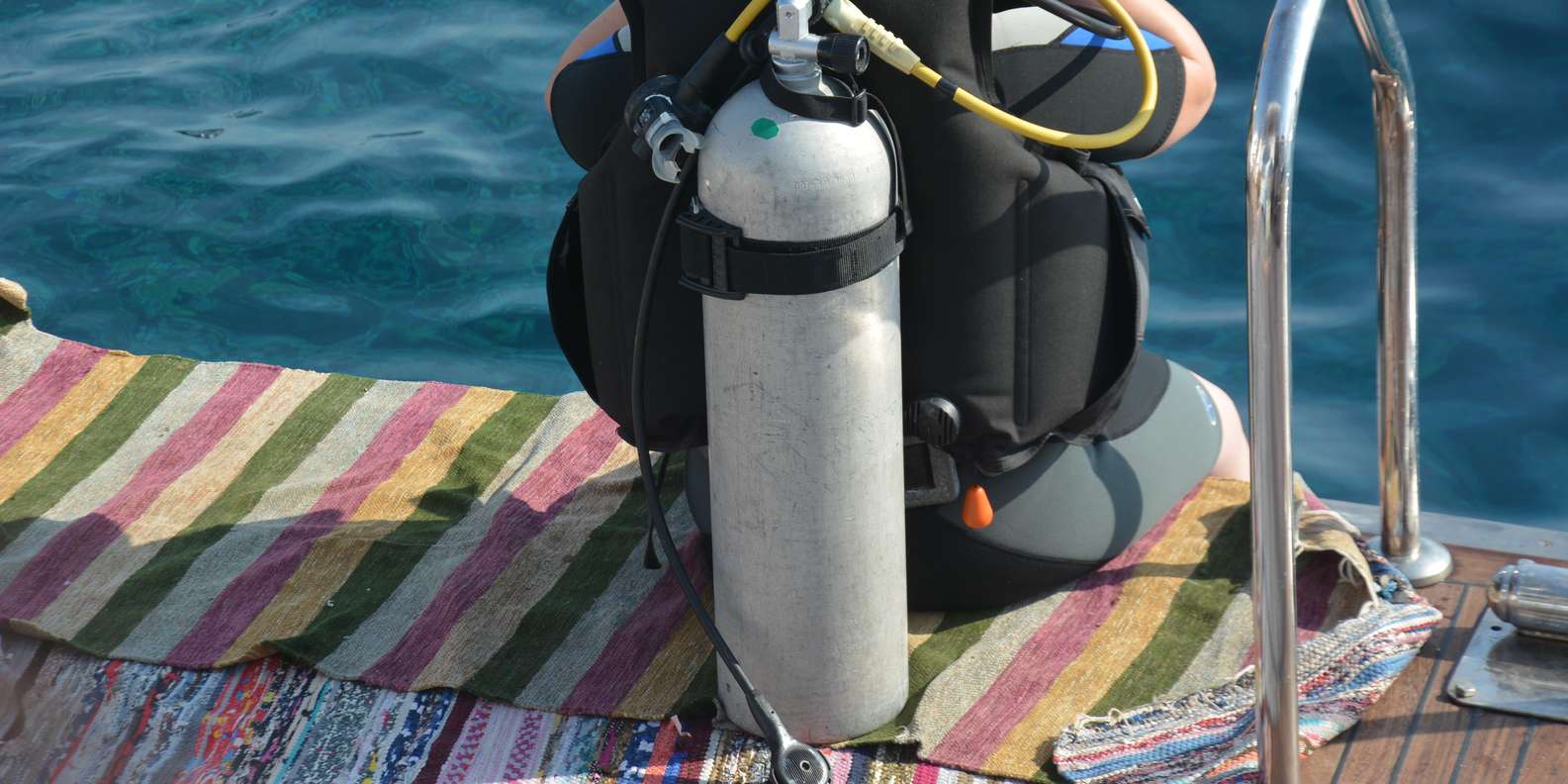
Dive-Site Comparison
Safaga's appeal is range. You can do a 10 m coral-and-fish dive at Tobia Arbaa in the morning and plan a 28–30 m wreck or wall profile the next day without changing base.
Safaga's headline sites compared
| Dive site | Max depth | Typical recreational depth | Current strength | Boat time from Safaga marina | Recommended level |
|---|---|---|---|---|---|
| Tobia Arbaa | 15 m | 6–14 m | Low | 25 min | OW / snorkel / refresher |
| Salem Express | 30 m | 18–28 m | Low to moderate | 30 min | AOW; Wreck specialty useful |
| Panorama Reef | 100 m+ drop-off | 12–30 m | Moderate to strong | 52 min | AOW; drift comfort required |
| Middle Reef | 30 m | 8–20 m | Low to moderate | 75 min | OW / AOW |
| Abu Kafan | 200 m+ drop-off | 18–30 m | Moderate to strong | 92 min | AOW / Deep specialty |
Tobia Arbaa is the easiest site in this group by a wide margin. Abu Kafan is the most advanced recreational reef here because the attraction is the wall and blue-water exposure, not a sheltered coral garden.
Why Divers Love Tobia Arbaa
Tobia Arbaa is Safaga's confidence-building site and the first choice for snorkeling tours in Hurghada and Safaga day-trip packages. PADI lists it at a maximum depth of 15 m and describes it as a shallow sandy-bottom pinnacle site known as the Seven Pillars, with Napoleon wrasse, nudibranchs, lionfish, jacks, silversides, overhangs, anthias, and regular turtle encounters (PADI, 2026).
What the site actually feels like underwater
The site is built around coral blocks and pinnacles rising from sand in a clean, readable layout. Newer divers like it because navigation is simple, visual references are constant, and there is no need to commit to deep water to get a full dive.
Key reasons Tobia Arbaa is so popular:
- Typical working depth band is 6–14 m, which keeps gas use low and bottom time high.
- Sandy patches between blocks reduce stress for students and refreshers.
- Coral heads create a swim-through feel without true overhead risk.
- Light penetration is excellent, so photos stay bright even on cloudy days.
- Snorkelers can enjoy the top of the coral structures in clear conditions.
- First-day check dives
- OW training dives
- Refresher days
- Mixed diver/snorkeler boats
- Underwater photography sessions
Photo conditions at Tobia Arbaa
Tobia Arbaa works for both wide-angle and macro shooting. The shallow profile keeps color loss low, and fish life stays close to coral blocks instead of retreating into deep blue water.
Expected photo advantages:
- Best ambient-light window: 09:30–13:30
- Strong natural color retention down to 10–12 m
- Lower current than Panorama or Abu Kafan
- More stable framing for newer photographers
- Better chance of clean fish portraits than on open-wall sites

Salem Express Wreck: Facts, Diving Style, and Ethics
Salem Express is one of the Red Sea's most emotionally charged wreck dives. The ferry struck a reef near Safaga at approximately 23:13 on 14 December 1991 and sank rapidly, with major loss of life; multiple diving authorities describe it as a maritime tomb and note that penetration is discouraged or forbidden by many operators out of respect for victims and families (PADI; Euro-Divers; Dive The World, 2026).
Salem Express key facts
| Factor | Detail |
|---|---|
| Vessel type | Roll-on/roll-off passenger ferry |
| Sinking date | 14 December 1991 |
| Approximate sinking time | 23:13 local time |
| Location | Off Safaga, Egyptian Red Sea |
| Depth range commonly dived | 12–30 m |
| Seabed reference depth | Approximately 30 m |
| Orientation | Lying on starboard side |
| Best-known exterior features | Hull, railings, propellers, loading structures |
| Common certification guidance | AOW minimum; Wreck specialty preferred |
| Ethical status | Widely treated as a maritime grave |
| Operator penetration policy | Exterior-only at most responsible operators |
What the dive is like
Most recreational divers visit Salem Express for the exterior profile. You normally descend onto the upper structure in the shallower range, then work toward deeper sections of the hull and stern depending on current, gas, and qualification.
Typical profile:
- Descent to 18–22 m on the upper side of the wreck
- Main tour depth 20–28 m
- Deeper looks toward 30 m near lower hull sections
- Moderate buoyancy control required because silting and contact risk are real
- Torch recommended even on exterior dives
Why some operators choose not to penetrate
Many operators do not offer interior penetration at all. The reasons are operational, ethical, and safety-based.
Main reasons penetration is often avoided:
- The wreck is considered a memorial site.
- Historical reports suggest not all victims were recovered.
- Silt, sharp metal, and confined-space overhead risk increase stress rapidly.
- Many holiday divers visiting Salem Express do not hold proper wreck training certification.
- Exterior diving already delivers the full visual impact without crossing ethical lines.
Why Experienced Divers Rate Abu Kafan and Panorama Reef So Highly
Abu Kafan and Panorama Reef are the two sites that make experienced divers extend their stay in Safaga. They deliver wall profiles, current-dependent drift opportunities, and more blue-water exposure than Tobia Arbaa or Middle Reef.
Abu Kafan
Abu Kafan is the deep one in local briefings. The reef top is shallow, with plateaus around 10–30 m and the wall dropping steeply into the blue; boat time is approximately 92 minutes from Safaga marina (SSI dive guide, 2026). Diving excursions from Hurghada occasionally include Abu Kafan on extended itineraries, but Safaga remains the most practical departure point.
Why advanced divers rate it:
- Immediate wall scenery rather than a gradual reef slope
- Stronger current potential than Tobia Arbaa
- Better blue-water watch for tuna, barracuda, and occasional reef sharks
- More demanding gas planning because divers drift deeper chasing pelagics
- Best use case for Nitrox and AOW/Deep specialty training
Panorama Reef
Panorama Reef is the classic all-rounder for divers who want drama without committing to Abu Kafan's longer run. Boat time is approximately 52 minutes from Safaga, with plateaus around 18–30 m and current-dependent drift potential on exposed edges (PADI Travel; operator site descriptions, 2026).
Why Panorama gets high ratings:
- Strong coral density on the plateaus
- Drop-offs that remain manageable for advanced recreational divers
- Good chance of schooling fish in current
- Better pelagic potential than sheltered sites
- Usually the safer advanced step-up before committing to Abu Kafan
Marine Life and Habitat by Site
Marine life in Safaga is not evenly distributed. Tobia Arbaa gives density and accessibility; Panorama and Abu Kafan give the better chance of blue-water surprises.
| Site | Hard coral /10 | Soft coral /10 | Pelagic sightings /10 | Reef fish density /10 | Turtle probability % | Dolphin probability % | Signature species |
|---|---|---|---|---|---|---|---|
| Tobia Arbaa | 8 | 6 | 3 | 9 | 35 | 8 | Napoleon wrasse, anthias, nudibranchs, lionfish, jacks |
| Salem Express | 2 | 3 | 2 | 5 | 5 | 2 | Glassfish, batfish, lionfish, resident wreck life |
| Panorama Reef | 7 | 8 | 6 | 8 | 18 | 10 | Barracuda, snapper, anthias, tuna, occasional reef sharks |
| Abu Kafan | 6 | 7 | 7 | 6 | 10 | 6 | Barracuda, giant trevally, tuna, occasional hammerhead reports |
| Middle Reef | 8 | 5 | 3 | 8 | 20 | 6 | Butterflyfish, clownfish, fusiliers, morays |
These are practical operator-level expectations, not guarantees. Pelagics are always condition-driven, especially at Panorama and Abu Kafan where current direction changes the entire feel of the dive.
Safaga vs Hurghada vs Marsa Alam
Safaga sits between Hurghada and Marsa Alam in style. It is less urban and less crowded than Hurghada, but easier for mainstream resort divers than the longer-run southern sites around Marsa Alam.
Which Red Sea base fits which diver
| Factor | Safaga | Hurghada | Marsa Alam |
|---|---|---|---|
| Crowd levels on day boats | Moderate to low | Moderate to high | Low to moderate |
| Airport transfer practicality | Good from HRG | Best from HRG | Best from RMF / Port Ghalib |
| Reef condition perception | Generally strong | Mixed by site and traffic | Often strongest |
| Wreck appeal | High — Salem Express | High — northern wreck access | Moderate |
| Pelagic potential | Moderate to good | Moderate | Good to very good |
| Beginner suitability | Excellent | Excellent | Good, but more site-dependent |
| Experienced-diver appeal | Strong | Strong, but busier | Very strong |
| Mixed diver/snorkeler days | Excellent | Excellent | Good |
Choose Safaga if you want:
- Less boat traffic than Hurghada
- Easier logistics than deep-south itineraries
- A balanced mix of easy reefs, walls, and a major wreck
- Better value for 3–5 day dive holidays
- More nightlife and hotel inventory
- Very easy airport logistics
- The broadest non-diving holiday infrastructure
- A more remote feel
- Better odds on pristine reefs and southern marine life
- Less interest in wrecks, more interest in reef biodiversity
Practical Cost Breakdown
Prices vary by hotel-based center, independent marina operator, and what is bundled. Current published Red Sea pricing for 2026 shows a 2-dive day trip at €74, a single-dive day at €43, a private guide at €50, an intro 2-dive package at €85, and a 10-dive/5-day package at €375 (operator price sheets, 2026; Egyptian Tourism Authority market data, 2026).
| Item | Price € | Notes |
|---|---|---|
| 2-dive day trip, certified diver | 74 | Weights, tank, and guide often included; check lunch and transfer |
| 1-dive day | 43 | Seen on 2026 Red Sea package sheets |
| Full equipment rental, per day | 25 | BCD, reg, suit, fins, and mask set |
| Nitrox upgrade, per day | 10 | Sometimes free for certified divers at premium centers |
| Private guide, per day | 50 | Useful for photographers, juniors, and rusty divers |
| Intro dive, 1 dive | 65 | Common entry-level price point |
| Intro dive, 2 dives | 85 | Better value if conditions are calm |
| 5 days / 10 dives package | 375 | Strong benchmark for week stays |
| Environmental / service fee | 5 | Often charged per person per day on top |
| 15 dives package | 525 | Based on €35 per guided boat dive equivalent |
What to ask before booking:
- Is lunch included?
- Is hotel transfer included from Soma Bay, Makadi Bay, or Hurghada?
- Are marine park or harbor fees extra?
- Is Nitrox free for certified users?
- Is a 15 L tank available and at what surcharge?
Who It's Best For
Safaga is not one destination for one diver type. It works because the site mix separates cleanly by skill level.
Best site by diver profile
| Diver profile | Best Safaga sites | Why it fits | Clear recommendation |
|---|---|---|---|
| Complete beginners | Tobia Arbaa, sheltered house reefs | Shallow, low current, easy descents | Start with intro dive or Discover Scuba Diving |
| Newly certified OW divers | Tobia Arbaa, Middle Reef, easy Panorama mooring | Build buoyancy without deep pressure | 2–3 easy days before walls or wrecks |
| AOW divers | Panorama Reef, Middle Reef, Salem exterior | Better depth range and more variety | Best all-round certification level for Safaga |
| Wreck divers | Salem Express | Historic wreck with strong visual impact | Go with a respectful, exterior-first operator |
| Underwater photographers | Tobia Arbaa, Panorama south plateau | Light quality, fish density, coral structure | Tobia Arbaa for macro and wide-angle ease |
| Snorkelers | Tobia Arbaa, shallow reef stops | Good surface visibility and coral access | Join a mixed boat day, not a wreck day |
| Deep / experienced divers | Abu Kafan, exposed Panorama drifts | Wall profile, current, blue-water potential | Nitrox strongly recommended |
Local Insight
Local skippers do not choose the day's site list by beauty alone. The decision is usually a mix of wind direction, wave height outside the bay, harbor departure queue, guest certification mix, and whether the captain wants a mooring-based dive or a drift.
How wind and current shape the site choice
When northerly wind is strong:
- Tobia Arbaa becomes more attractive because it is easier to run and brief.
- Middle Reef may still work if the sea state is manageable.
- Abu Kafan is the first major site likely to be dropped because the crossing is longer and more exposed.
- Operators may switch from a plateau circuit to a one-way drift.
- New OW divers are often moved to Tobia Arbaa instead.
- Photographers usually prefer avoiding Panorama on these days because wide-angle stability falls fast.
- Salem Express and Tobia Arbaa become easier operational choices.
- Abu Kafan may be canceled because losing 20 minutes at harbor can mean losing the safe second-dive window.
- Mixed-experience groups are often split by guide rather than sent to a fully advanced plan.
Suggested 3-Day and 5-Day Dive Plans
The smartest Safaga itinerary starts easy and escalates. That lets divers adjust weighting, trim, and air consumption before moving onto deeper or more exposed profiles.
3-day plan
- Day 1: Tobia Arbaa + easy local reef
- Day 2: Panorama Reef + Middle Reef
- Day 3: Salem Express + relaxed second dive
- Newly certified OW divers
- Mixed couples
- Divers returning after a long break
5-day plan
- Day 1: Tobia Arbaa check dive + second easy reef
- Day 2: Panorama Reef north/south
- Day 3: Salem Express + local reef
- Day 4: Middle Reef + Panorama drift or Abu Kafan
- Day 5: Abu Kafan or photo-focused Tobia Arbaa repeat
- AOW divers
- Divers using Nitrox
- People wanting one easy day, one wreck day, and two advanced reef days
Planning Notes for Responsible Divers
Safaga is easy to over-plan and under-dive. The better approach is to lock a 3–5 day window and let the operator adjust the actual site order to weather and guest ability.
Best practice:
- Treat Salem Express as a memorial site.
- Use Nitrox if you plan repeated 20–30 m profiles.
- Book 3 days minimum if you want Tobia Arbaa, a wall, and the wreck.
- If you are staying in Soma Bay, Safaga is the highest-efficiency departure point.
- If your group includes snorkelers, prioritize Tobia Arbaa over wreck-focused days.
Final Verdict
Safaga is one of the Red Sea's best-value dive bases because it compresses easy reefs, proper wall diving, and a famous wreck into one manageable day-boat zone. Tobia Arbaa is why newer divers fall in love with Safaga, Salem Express is why wreck divers talk about it, and Panorama Reef plus Abu Kafan are why experienced divers keep coming back.
For most travelers, the winning formula is simple:
- Stay in Safaga or Soma Bay
- Dive at least 3 days
- Start with Tobia Arbaa
- Add Panorama or Abu Kafan if you are AOW+
- Treat Salem Express with respect, not as a checklist item
Sources
- PADI (2026). Tobia Arbaa dive site profile and Red Sea season guidance. padi.com
- PADI Travel (2026). Red Sea diving seasons and monthly conditions. paditravel.com
- Egyptian Tourism Authority (2026). Red Sea dive destination data and market pricing. egypt.travel
- SSI — Scuba Schools International (2026). Abu Kafan and Safaga site descriptions. divessi.com
- Euro-Divers (2026). Salem Express wreck briefing and operator ethical guidelines. euro-divers.com
- Dive The World (2026). Salem Express wreck profile and certification recommendations. dive-the-world.com
- Liveaboard.com (2026). Red Sea seasonal visibility and temperature data. liveaboard.com


